The Clock Changes, the Mood Doesn't Have To: Winter Light for UK Days

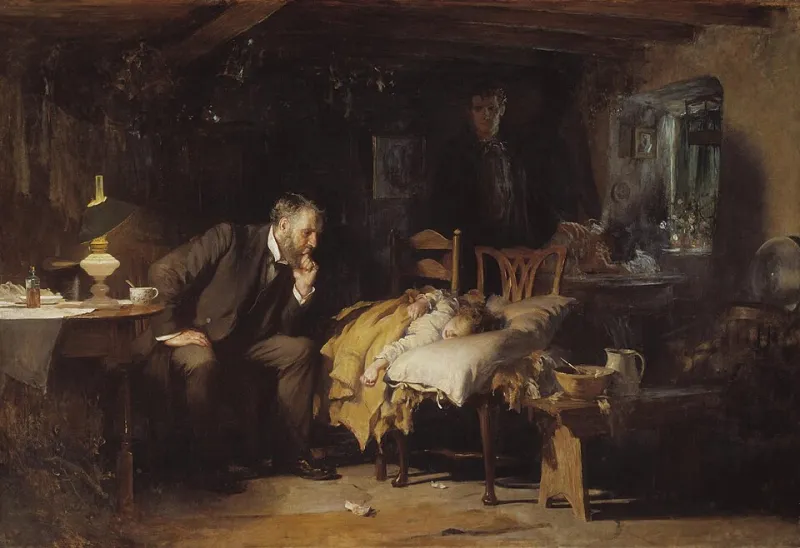
Photo: Bernard Lens II, CC0, via Wikimedia Commons
There's a moment in late autumn when you look up from your desk, see that it's fully dark, and feel something in your chest quietly deflate. It's about four in the afternoon. You've still got an hour of work, a bus, a tea to make, and the whole evening suddenly feels like a corridor rather than a room.
If that sounds familiar, you're not being precious. You're being a mammal with a body clock, living on an island that gets quite dark in winter.
Why the Early Sunset Lands So Heavily
Your body runs on light. Not metaphorically — literally. The amount and timing of light reaching your eyes tells your internal clock what time it is, when to feel alert, and when to start winding down. When that signal weakens, the whole rhythm can drift: you may feel foggy in the morning, sluggish in the afternoon, and oddly wired at midnight.
British winter stacks a few things on top of that. Many of us commute in the dark and come home in the dark, so the only daylight we see is through a window. Outdoor time drops. Movement drops with it. And the cultural script — Christmas adverts, jollity, a hundred expectations — often doesn't match how flat we actually feel in November and February.
None of that is a character flaw. It's a set of conditions. And conditions, thankfully, can be nudged.
The First Hour Matters More Than the Rest
If you only change one thing, make it this: get outside within roughly an hour of waking, even briefly.
Outdoor light, even under thick grey cloud, is dramatically brighter than indoor lighting. A dim November morning still delivers far more useful light than the brightest lamp in your flat. Ten minutes at the door with a mug of tea counts. So does walking the first part of the school run, or stepping out before you open your laptop.
And if you're up before sunrise — which, for much of December and January, most of us are — don't force it. Instead, aim for daylight at the first opportunity: a lunchtime loop around the block, coffee drunk standing outside, a phone call taken on your feet.
Rearranging the Small Things
You'd be surprised how much difference a desk position makes. Sitting side-on to a window rather than facing a wall, keeping blinds open, moving the chair that's been quietly blocking the light since October — these are two-minute jobs with a real payoff.
A few things that tend to work better than willpower:
- Put your morning tea or coffee by the window rather than at the desk.
- Take one call a day outdoors, even if it's just standing in a doorway.
- Eat lunch somewhere with daylight before you eat it somewhere with a screen.
- Walk one bus stop further, or get off a stop early, on the way home.
- Keep a warm lamp for evenings, so the harsh overhead light isn't your only option after dark.
The point isn't optimisation. It's giving your body a few clear signals that the day has a shape.
A Quick Word on Vitamin D
Public health advice in the UK is fairly straightforward: consider taking a daily supplement of 10 micrograms (400 IU) of vitamin D through autumn and winter, roughly October to March. The reason is simple — from about October, sunlight in Britain isn't strong enough for your skin to make it.
This isn't a cure for low mood, and it won't replace daylight. But it's a sensible baseline for many people. If you're pregnant, taking other medication, or managing a health condition, have a quick word with a pharmacist or GP first. Supplements are cheap and widely available, but a two-minute conversation is still worth having.
When Light Therapy Is Worth Asking About
You've probably seen the lamps. Bright white boxes, usually advertised with the word SAD somewhere nearby.
Light therapy can genuinely help some people whose mood dips seasonally, but it's worth understanding what it is before buying. Typical devices deliver around 10,000 lux, and the usual pattern is roughly 20 to 30 minutes in the morning, fairly consistently, over weeks rather than days. Sitting closer to a lamp for a weekend won't do much.
It's also not suitable for everyone — particularly people with certain eye conditions or those taking medication that makes them light-sensitive. If your winters reliably flatten you, that's a good reason to mention it to your GP rather than self-prescribe from a search engine.
When It's More Than a Flat Afternoon
Feeling a bit low on dark days is common. Feeling low most of the day, most days, for a couple of weeks or more is a different thing — especially alongside changes in sleep, appetite, concentration, or a loss of interest in things you usually enjoy.
That's the point to speak to your GP. In England you can also refer yourself to NHS Talking Therapies without seeing a GP first; Scotland, Wales and Northern Ireland have their own equivalents. If you're having thoughts of harming yourself, please reach out now — call 111 and choose the mental health option, or contact Samaritans free on 116 123, any hour.
Small Light, Realistically
You are not going to rebuild your relationship with winter in a week. You don't need to. A walk before work, a window seat, a supplement by the kettle, a lamp if it's clinically sensible for you — that's a decent winter. Not a transformation. Just enough light to keep the days from feeling like one long evening.