Before You Sit Down: A Calm, Clear Guide to Your First Therapy Appointment in the UK
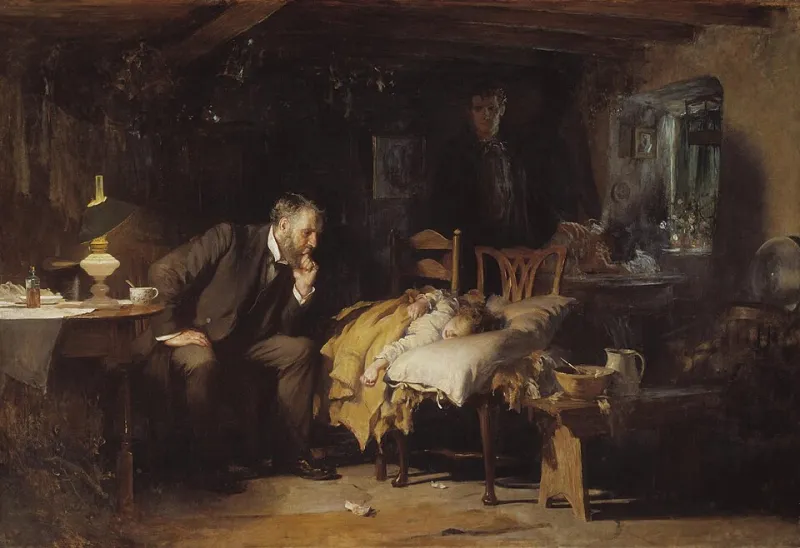
Photo: Luke Fildes, Public domain, via Wikimedia Commons
If you have never been to therapy, the first appointment can feel like standing outside a room you are not quite sure you are allowed to enter. You might wonder what you will be asked, whether you will have to cry, whether the therapist will judge you, or whether you will come away feeling worse. These are very common worries, and none of them mean you are not ready.
This guide is a gentle walkthrough of what really happens in a first therapy session in the UK. It is not a rulebook, because therapists work in different ways. But it should give you a clearer sense of the shape of things, so you can arrive feeling a little more informed and a little less on edge.
What the first session is actually for
A first session is usually not the place where you solve everything. It is more like an introduction and a gentle assessment. The therapist will want to understand why you are coming, what has been happening, what you would like to be different and whether they are the right person to help. You will also get a chance to ask about how they work.
Some therapists call this an initial consultation, an assessment session or a first meeting. It might last around 50 minutes, though some private practitioners offer a shorter introductory call first. The aim is not to interview you for a job. It is to begin building a picture together and to see whether the fit feels workable.
The practical bits: time, room and paperwork
In private practice, you will usually book directly with the therapist. They should tell you the fee, session length, cancellation policy and whether sessions are online, by phone or in person. If you are going to a clinic or therapy room, you might sit in a waiting area first. If it is online, you will be sent a link. It is fine to ask where to go, what to bring and whether there is parking or step-free access.
You may be asked to complete a short form before or at the start. This often covers contact details, emergency contact information, consent and sometimes a brief questionnaire about how you have been feeling. It can feel a bit administrative, but it helps the therapist keep things safe and organised.
The therapist will likely explain confidentiality, boundaries and what happens if you need to cancel. They may also ask about any medication, previous therapy or support you have had. You do not have to share everything in the first session. You are allowed to say you would rather not answer something yet.
Confidentiality, explained without the fine print
Confidentiality means what you say in therapy is generally kept private. That can feel reassuring, especially if you are used to keeping things to yourself. But it is not an absolute promise, and good therapists are transparent about that.
There are usually limits around serious risk. If a therapist believes there is a significant risk to your safety or someone else's, they may need to share information with appropriate professionals, such as your GP or emergency services. They may also have clinical supervision, where they discuss their work with a more experienced practitioner, but this is usually done without identifying you unnecessarily. Safeguarding concerns, such as risk to children, also have legal and ethical limits.
The best approach is to ask directly: What are the limits of confidentiality here? How do you handle notes? What would you share, and with whom? A good therapist will welcome those questions.
What about notes?
Many therapists keep brief notes after sessions. These are usually to help them remember what you have discussed and to work safely and consistently. They are not normally a verbatim transcript of everything you say. In private practice, notes are kept securely and should be handled in line with data protection rules. You can ask how long notes are kept and who can see them.
If you are using an NHS service, notes may form part of your health record. It is reasonable to ask how information is stored and shared. You do not need to be an expert in data law to ask a simple question about privacy.
Private practice or NHS: how to choose
In the UK, there are broadly two routes. You can go through the NHS, often by speaking to your GP or by referring yourself to NHS Talking Therapies in England, depending on local services. This may be free at the point of use, but waiting times vary and the number of sessions may be limited. In other parts of the UK, the pathways differ, so it is worth checking what is available where you live.
Private practice usually means you pay per session and can often choose your therapist and start sooner, though costs vary. Some therapists offer reduced-fee slots, trainee rates or sliding scales, so it is okay to ask. If you are looking for a private therapist, check whether they are registered with a recognised professional body, such as BACP, UKCP or BABCP, and ask about their qualifications, insurance and experience with what you are bringing.
Neither route is better or worse. It depends on your needs, your budget, your location and how urgently you would like to begin.
Questions you are allowed to ask
You can ask anything practical that helps you feel safe. What training do you have? How do you usually work? How many sessions might we have? What happens if I need to cancel? Do you offer online sessions? How do you handle disagreements or endings? What if I do not know what to talk about?
You are also allowed to say that you are nervous. You are allowed to ask for a glass of water. You are allowed to take a pause. You are allowed to decide after the first session that this therapist is not the right fit, and to try someone else. Fit matters. Therapy is a relationship, and it is okay to be discerning.
If you cry, freeze or say nothing much
People often worry about crying, but therapists are used to tears. You do not need to apologise for them. Equally, you might not cry at all. You might go blank, talk around the edges, or feel strangely cheerful. All of these are normal responses to sitting with a stranger and talking about personal things.
Silence is allowed too. A good therapist should not rush to fill every gap. They may gently check in, but you do not have to perform or produce a perfect summary of your life. It is fine to say: I am not sure where to start. That is often a perfectly good start.
Taking the first step without over-preparing
You do not need to write an essay before you go. You might jot down a few things you would like the therapist to know, or one question you want to ask. You might plan something gentle for afterwards, like a walk or a cup of tea, because first sessions can leave you feeling a bit tender.
The first appointment is not a test. It is a conversation with a purpose, and you are allowed to take it at your pace. At Namaste Therapy, we believe calm and clarity should be part of the process from the very beginning. If you are considering therapy, the first step is simply to find out more, ask your questions and see what feels right for you.