The Soft Landing: What to Do With the Hour After Therapy
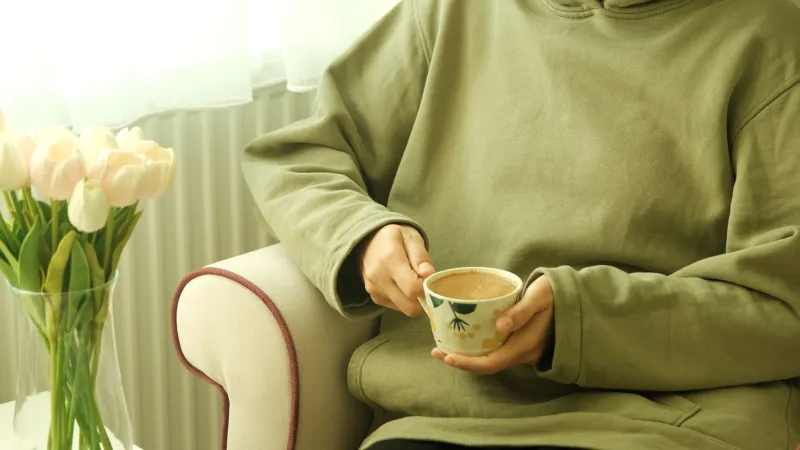
There is plenty of good advice about preparing for therapy. What to bring, how to explain it to your boss, whether to arrive early and sit in the car park for ten minutes. All useful. But there is another part of the experience that gets far less attention: the hour after you leave the room.
That hour can be odd. You might feel lighter, or rawer, or completely flat. You might have a thought you want to hold on to, and a bus to catch. You might walk out into a November evening that is already dark, with the rain shining on the pavement, and wonder how to be a normal person again before teatime. The session has ended, but the work has not quite finished settling. Treating that hour as a soft landing rather than a scramble can make a real difference to how the week unfolds.
The threshold nobody warns you about
Therapy rooms are strange, useful places. They are ordinary enough—a chair, a clock, a box of tissues—but what happens there can loosen something. You may have said a thing out loud for the first time. You may have cried and then made a joke about it. You may have spent fifty minutes circling a feeling and only found the words on the way down the stairs.
That is not a failure of the session. It is often how the work behaves. The hour after therapy is a threshold between that room and ordinary life, and thresholds deserve a little care. You do not need a full ritual with candles and a journal and a personalised playlist. You need a few small choices that signal to your nervous system: we are moving gently now, not being shoved.
The commute home is part of the work
If you travel home by bus, train or Tube, the journey is not dead time. It is a decompression chamber. On dark evenings especially, the temptation is to fill it—scroll the news, answer messages, listen to a podcast at 1.5 speed. Sometimes that is fine. But if you can, leave a little space.
Look out of the window without demanding anything of yourself. Notice the shop lights and the wet roads. If you are driving, keep the radio low for the first ten minutes. If you are walking, take the slightly longer route that avoids the busiest street. None of this is dramatic. It is just a way of letting the session breathe rather than bundling it straight into a bag with your keys and your half-eaten sandwich.
One line is enough
A lot of people leave therapy with good intentions about journalling. Then life happens, and the beautiful notebook stays unopened until March. A kinder approach is to write one line. Not a summary, not a report, not a plan for self-improvement. Just one sentence that captures where you landed.
It might be: “I noticed I get defensive when I feel unseen.” Or: “We talked about my dad and I felt sad, not angry.” Or simply: “That was harder than I expected.” One line is enough to mark the session without turning it into homework. You can keep it in the notes app on your phone or on the back of a receipt. The point is not the record. The point is the pause.
Build a buffer before emails and family demands
If you can arrange it, give yourself a small buffer before you re-enter the demands of the day. This is easier for some people than others. Not everyone can take a hour off work, and school pick-up does not move because you have been talking about your childhood. But even ten minutes counts.
A buffer might mean sitting in the car for a moment before going into the house. It might mean putting the kettle on before you open your inbox. It might mean telling your partner, “I am back, but give me twenty minutes to land.” That sentence is not dramatic. It is just information. Most people, once told, are surprisingly willing to give you the twenty minutes.
If you go straight back to work, try to avoid scheduling a difficult meeting in the slot immediately after therapy. If that is unavoidable, take the stairs rather than the lift. Stand by a window. Drink a glass of water slowly. These are tiny acts, but they create a little seam between the therapy room and the spreadsheet.
Put the big decisions on hold
The hour after therapy is not the time to decide whether to change jobs, end a relationship, move to the coast or send That Message. Therapy can bring clarity, but it can also bring a kind of raw honesty that feels like certainty and is not always reliable. You may leave feeling that everything must change now. You may leave feeling that nothing will ever change. Both are understandable. Neither is a good basis for a decision.
Give yourself at least a day. Ideally, sleep on it. If something urgent genuinely needs a response, keep it practical and small: confirm the appointment, ask for the extension, say you will come back to the question tomorrow. The big stuff can wait until the dust has settled and you have had a cup of tea.
Let the hour be ordinary
There is a myth that after therapy you should feel something profound. Sometimes you will. Often you will just feel hungry, or tired, or mildly annoyed by the parking charges. That is allowed. The hour after therapy does not have to be a spiritual event. It can be a stop at the shop for milk, a chat with the dog, a rerun of a favourite quiz show.
Ordinary life is not the enemy of therapy. It is where the work gets tested and absorbed. The calm you find in the room is not meant to stay in the room. It is meant to come with you—into the queue at the Post Office, the family group chat, the dark walk home. Small, repeated choices help it travel.
A gentle close
As you leave the session, you might silently say to yourself: “That is done for now.” Not “that is solved”, not “I must think about this all evening”. Just done for now. Then let the hour after therapy be a landing, not a launch. Put the kettle on. Take the longer route. Write one line. Leave the big decisions for another day.
At Namaste Therapy, we think of that hour as part of the treatment, not an afterthought. It is where calm and balance get a chance to settle into ordinary life. And ordinary life, with all its buses and emails and dark November evenings, is exactly where you need them.